


When Fairy Tales Actually Fix Sibling Fights (Parent Survival Guide)
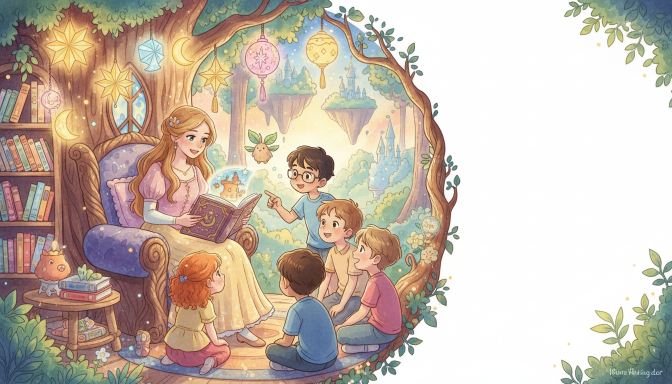
Five minutes before bedtime, my kids began a full-contact debate over a blue cup. I took a deep breath, grabbed a book, and said, “Tonight’s story is about two dragons who learn to share... or else.” Reader, the room actually got quiet. Magic? Maybe. Or just fairy tales doing their sneaky, ancient work. 🙃
Why fairy tales help with sibling fights
Stories are a safe mirror. Kids see a character mess up, repair, and try again—without feeling called out. No finger-pointing, just “Huh, that dragon kind of sounds like me.”
Also, fairy tales slow the moment down. When tempers are hot, logic is on vacation. A short tale gives everyone a beat to breathe, laugh, and reset before we try the “Who had it first?” talk.
Bonus: stories sneak in language for feelings and solutions. Less “MINE!” and more “I feel mad because...” Fingers crossed. 🤞
When to use a story (and when not to)
Use a fairy tale when the conflict is ordinary kid stuff—turn-taking, fairness, someone touched someone else’s pillow, again. You want a calm-down tool, not a courtroom.
Skip the story if someone is hurt or the meltdown is at nuclear levels. Handle safety first, snack/water/hug second. Then circle back with a short tale once everyone’s under the “not-about-to-yeet-a-toy” threshold.
How to choose the right fairy tales for siblings
Pick stories that match your kids’ ages, hot-button issues, and attention spans. Keep it short, warm, and a little funny—humor disarms better than any lecture.
- Look for themes: sharing, fairness, pride vs. humility, teamwork, repair after mistakes.
- Choose clear, kind consequences (no doom-and-gloom). Kids learn better from “try again” than “forever punished.”
- Go for repetition and strong moral beats—great for younger siblings.
- Include diverse families and sibling dynamics so everyone sees themselves.
Examples and storytelling techniques that actually work
Not a perfect library? Same. Here are favorites across ages and how to use them fast.
- The Proud Princess (O pyšné princezně): Pride gets in the way, humility and kindness win. Great for “You’re not the boss of me!” seasons. Try a quick role-play: one kid plays the princess, the other the gardener—swap roles and notice feelings.
- Ramona and Beezus (chapter-book vibe): Sister friction with humor and repair. Read a scene, then ask, “Where did each girl feel misunderstood?”
- The Berenstain Bears Get in a Fight: Simple, concrete steps to make up. Pause after the argument scene and let your kids script the apology.
- Cinderella (remixed): Talk less about sparkle, more about kindness, fairness, and speaking up. Ask, “What’s a fair way to divide chores at home?”
- Original, three-minute bedtime tales: Make up a “Two Squirrels, One Acorn” story with your kids’ names swapped into the characters. Short, silly, effective.
Formats that help:
- Bedtime story reset: Read after bath, before lights out. Keep it cozy; friction is lower when everyone is sleepy. 💤
- Story sandwich: Story → quick chat → one line of praise (“You two handled the ending like a team”).
- Co-create: Build your own fairy tale and let each child choose a power (patience, kindness, listening) that saves the day.
What kids actually gain (beyond a quieter evening)
- Self-knowledge: “I feel jealous when...” becomes normal words, not a volcanic eruption.
- Empathy: Seeing both sides through characters (“Oh, the troll was lonely, not mean”) softens sibling standoffs.
- Conflict skills: Turn-taking, do-overs, and repair scripts that you can reuse tomorrow... and the next twelve tomorrows.
Research-backed, no-nonsense parent take
Child development research is clear: naming feelings lowers their intensity, and stories give kids safe practice with perspective-taking. Psychologists also note that routines plus narrative (“first we breathe, then we read”) calm the nervous system, which is code for “less yelling, more listening.”
Stories create a “third thing” to focus on, so kids aren’t defending themselves—they’re exploring ideas. And the more we model repair (“I snapped; I’m sorry; let’s try again”), the faster they copy it. Social learning for the win.
Practical tips and activities you can use tonight
- Call a story timeout: “Pause. Three-minute tale.” Keep it short. Reset first, discuss after.
- Try role-play: Swap roles from the story—let the “annoyed” sibling play the annoying troll. Giggles = tension release.
- Alternate endings: Ask, “What’s a kinder ending we could try?” Vote on the best one and act it out.
- Pause-and-ponder questions: “Who felt left out?” “What was fair?” “What could we try at home?”
- Sibling switch: Each child says one strength the other used in the story (listening, patience, bravery). Fast, powerful.
- Story tickets: Give each kid two “story tickets” a day to request a quick tale before a fight goes boom.
- Make a calm corner: Pillow, picture book, timer. Short reset, then a story together.
- Co-write your fairy tale: One child sets the problem, the other writes the fix. Put it on the fridge like a treaty. 📝
Quick parent checklist
- Is everyone safe and fed? If not, story can wait.
- Can they listen for three minutes? Go for it.
- Does the tale map to the fight (sharing, fairness, tone)? Perfect.
- Do you have one sentence for after? “In our house we repair.”
Real talk, parent to parent
Some nights the story lands like a charm. Other nights, someone throws a sock and you wonder why you tried. Same. Keep the faith. The point isn’t perfect behavior—it’s practicing repair, again and again, until it sticks.
My secret trick? A tiny, dramatic whisper: “Tonight’s hero learns to share the magic cup.” They lean in every time. Damn, stories are powerful.
Want help finding the right tales?
Grab sibling-friendly story ideas and quick prompts at Read Fluffy. Short, playful, and built for tired grown-ups who still want connection. Come back and tell me what worked—or what totally flopped. We’re in this together. 🤝