


Raising Brave Princesses: Modern Tales Without Stereotypes
Last night my kid asked, “Why can’t the princess save herself?” while I was juggling a bedtime snack, a blanket with mysterious crumbs, and my patience. I nearly spilled my tea on the cat. Honestly? Same question, kid. Why are so many princesses waiting around when bedtime is in 8 minutes and the dragon (aka our laundry) is already breathing fire? 👑🔥
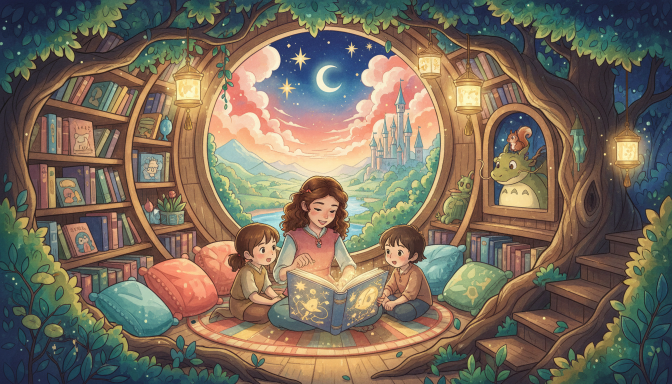
Why we need princess tales without stereotypes
Our kids soak up stories like tiny, adorable sponges. If the message is “wait to be rescued,” that sticks. But if the story says, “use your voice, try, fail, try again, and build a team,” that sticks too—and it’s way more useful when a math test or a playground drama hits the fan.
Studies have flagged how traditional princess media can reinforce gender stereotypes, while broader, active roles expand kids’ ideas about who they can be. Translation for my tired parent brain: brave stories grow brave kids.
What a non-stereotypical princess story looks like
Short version? She’s not a trophy. She’s the plot.
- Strength that isn’t just sword-swinging—think emotional grit, problem-solving, helping others.
- Courage without perfection—she’s allowed to be scared and still try. That’s real life.
- Independence with community—she leads and collaborates instead of waiting around.
- Curiosity, humor, and consent—no creepy kisses-in-your-sleep, thank you very much.
Remixing the classics (without the eye-rolls)
Sleeping Beauty
Instead of snoozing for a century, she studies the curse, sets boundaries, and builds a team. Maybe she learns about herbal remedies, protective runes, and conflict de-escalation. When the spindle drama hits, she’s got a plan—and yes, she saves herself, with friends at her side, because community is powerful.
Princess and the Pea
What if sensitivity is her superpower? She notices what others miss—like a drafty window or a friend who’s quietly sad. She doesn’t “pass” a test to be worthy; she redesigns the test to be kinder and smarter. Royal problem-solving for the win.
Books that actually deliver strong, brave, independent princesses
- The Paper Bag Princess by Robert Munsch—funny, fiery, and gloriously subversive.
- The Princess in Black series by Shannon and Dean Hale—monster-fighting princess by day and night. Capes optional, snacks mandatory.
- Interstellar Cinderella by Deborah Underwood—STEM sparkle and agency galore.
- Ella Enchanted by Gail Carson Levine—clever consent, grit, and heart.
- Not All Princesses Dress in Pink by Jane Yolen and Heidi E. Y. Stemple—mud, cleats, tiaras. All of it can coexist.
- Princeless by Jeremy Whitley—comic-book fun with a princess who rescues herself (and others).
Quick tip: peek inside for how conflicts are solved. If the answer is “a prince fixes it,” hard pass. If it’s “she tries, learns, and keeps going,” toss it in the cart.
Make your own modern princess tales with kids (it’s less work than it sounds)
- Flip the script: Ask, “What if Sleeping Beauty wasn’t asleep—what was she building?” Write three silly possibilities and vote with snacks.
- Switch the quest: “The prince is stuck in traffic. Now what?” Your princess forms a rescue squad with a librarian, a blacksmith, and the grumpy castle cat.
- Role-play nights: Kids pick jobs—navigator, diplomat, inventor. You’re the narrator who says “YES, AND…” like an improv coach who’s out of coffee.
- Power-ups: When the princess hits a snag, roll a die for help—ask for advice, research, take a break, phone a friend, try a new tool, laugh it off and keep going.
- Consent and boundaries: Model it in the story—she chooses who to help, who helps her, and when she needs space. Easy line to use: “I choose my own story.”
Why these stories matter (beyond the cute crowns)
- Confidence: Kids see effort > perfection and start taking brave little risks—reading aloud, climbing the big slide, trying long division without tears (ok, fewer tears).
- Empathy: Heroes who listen and help build kinder classmates and teammates.
- Critical thinking: Rewriting tales trains “Wait, is that fair?” muscles. Goodbye, blind obedience. Hello, curious brains.
Interactive ways to read, rewrite, and create at home or in class
- Two-voice reading: You read narration, your kid reads the princess. Swap roles halfway. Chaos, laughter, literacy.
- Story soundboard: Kids add a soundtrack—clinking tools, dragon snores, footsteps. Low-tech pots and pans welcome. Sorry, neighbors.
- Pea problem challenge: Build a better mattress test using empathy, design, and science. What are we measuring—comfort, kindness, resourcefulness?
- Hero journal: After every story, jot three brave moments that didn’t involve a sword.
- Community credits: Who helped the princess win? List them—and how she helped them back.
What research and experts are saying
Educators and librarians have long noted that repeated exposure to narrow roles limits kids’ self-concepts. Research on princess media has linked heavy, traditional viewing with more stereotypical views over time, while broader portrayals support flexible thinking and play.
Media advocacy groups also push for stories where girls speak more, solve problems, and take initiative—because kids mirror what they see. Honestly, when my child “rescued” our Roomba from under the couch with a spaghetti spoon, I saw initiative. Messy, chaotic, heroic initiative. 😂
Real-talk confessions from a tired parent
I’ve absolutely hidden a book because I couldn’t handle one more “love at first sight” plot on a Tuesday night. I’ve also ugly-cried when my kid rewrote Růženka as a girl who naps because REST IS POWER and then wakes up to start a community garden. Did I fist-pump at bedtime? You bet your crown I did. 💪
Try this tonight (quick wins)
- Ask one “What if” question before page one. Watch the story change shape.
- Spot the helpers. Name how the princess helped them back.
- Trade the rescue. Let the princess choose a plan A and plan B.
- End with a brag: “Today I was brave when I ____.” You go too, grown-up.
Let’s swap ideas
Got a favorite non-stereotypical princess book? A classroom activity that actually worked? A rewrite of Princess and the Pea where the pea becomes soup for a midnight picnic? Drop your ideas, share your wins, and your glorious fails. We learn together, we laugh together, we raise brave kids together.
If you want fresh prompts and ready-to-read tales that champion strong, courageous, independent heroes, explore more at readfluffy.com. New stories, zero waiting for a prince. Hell yes.